
Augmented Intelligence: Leveraging Technology like a Superpower
BLUF | Augmented Intelligence fuses human creativity with machine precision to enhance decisions, amplify insight, and drive smarter outcomes.
Over the last decade, and especially the last 18 months, artificial intelligence (AI) has been heralded as the next great technological revolution. From self-driving cars to virtual assistants, AI promises to transform nearly every aspect of our lives. However, as impressive as modern AI systems are, they still face significant limitations. Limitations such as understanding context, inability to reason, lacking emotional intelligence, and developing strategy. That's where the concept of augmented intelligence comes into play – an approach that combines the strengths of humans and machines to achieve something greater than either could accomplish alone.
What is Augmented Intelligence?
At its core, augmented intelligence is about enhancing human intelligence rather than replacing it. Instead of attempting to create artificial general intelligence that can match or surpass human cognition, augmented intelligence systems are designed to complement and extend our natural capabilities. These systems leverage advanced algorithms, massive datasets, and immense computational power to process information in ways that would be impossible for the human mind alone.
One of the key advantages of augmented intelligence is its ability to handle complex, data-intensive tasks with incredible speed and accuracy. For example, an augmented intelligence system could rapidly analyze millions of medical records, identifying patterns and insights that could lead to breakthrough treatments or more effective preventative care strategies. Another example, you upload a large document into a Large Language Model (LLM) like ChatGPT, Gemini, Claude, or another one and you start asking questions about the document. The LLM parsed and analyzed the document for you, in seconds, so you can ask it questions. This Saves you time, improves your understanding, and probably improves your productivity.
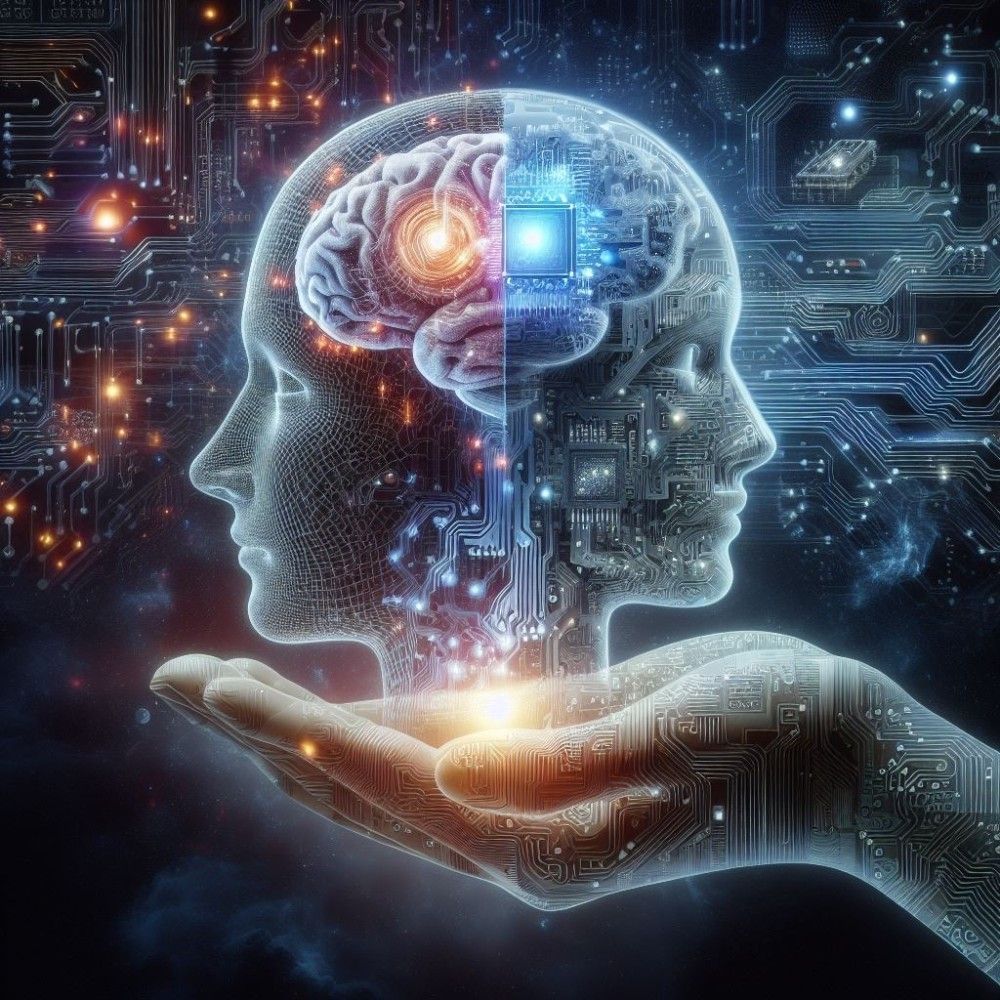
Augmented Intelligence: Where Human Ingenuity Meets Machine Precision (Image created with DALL-E 3)
Augmented Intelligence in Action: Decision Intelligence
One area where augmented intelligence is already making a significant impact is in the field of decision intelligence. Decision intelligence combines various disciplines, including data science, decision analysis, behavioral science, and AI, to help organizations make better, more informed decisions.
Decision intelligence starts by understanding the decision at hand, breaking it down into its core elements: actions, intermediates, externals, and outcomes. This systematic approach ensures that all relevant factors are considered, from the potential choices that can be made (actions) to the dependencies and consequences of those choices (intermediates) as well as external forces and constraints beyond the organization's control aimed at a desired outcome.
At its core, decision intelligence bridges the gap between the non-material aspects of an organization (e.g. people, strategy, doctrine, policy) and the material aspects (e.g. hardware, software, data, analytics, AI). By leveraging augmented intelligence techniques, decision intelligence systems can provide decision-makers with highly accurate predictions, simulations, and recommendations based on vast amounts of data and complex modeling.
The Power of Human-Machine Collaboration
One of the most exciting aspects of augmented intelligence is the potential for true collaboration between humans and machines. While AI systems excel at processing vast amounts of data and performing complex calculations, humans possess unique abilities in areas such as creativity, emotional intelligence, and strategic thinking.
“Computers are great at patterns, humans are great at strategy” - David Epstein, Range
By combining these strengths, augmented intelligence systems can achieve incredible results. Humans can provide the high-level goals, context, and intuition, while the machine learning algorithms and computational power of the augmented intelligence system can rapidly explore countless scenarios and provide data-driven recommendations.
This collaborative approach not only leads to better outcomes but also helps to build trust and acceptance of these advanced systems. When humans are actively involved in the decision-making process, rather than being replaced by opaque "black box" AI, they are more likely to understand and embrace the insights and recommendations provided by the augmented intelligence system.
You're probably already living with augmented intelligence in your day-to-day life right now without even realizing it. Any guesses? If you use Waze, Google Maps, Apple Maps, or any other GPS navigator, you're taking information from a complex supercomputer powered by billions if not trillions of data points to provide you with a recommended path to your destination. But you are in the driver's seat – the computer is providing you, the human, a recommendation based on current conditions. You can either choose to follow it or not. And if you're like me, sometimes when you override the recommendation, you're stuck in really bad traffic. And you think to yourself, "I knew I should've followed Waze."
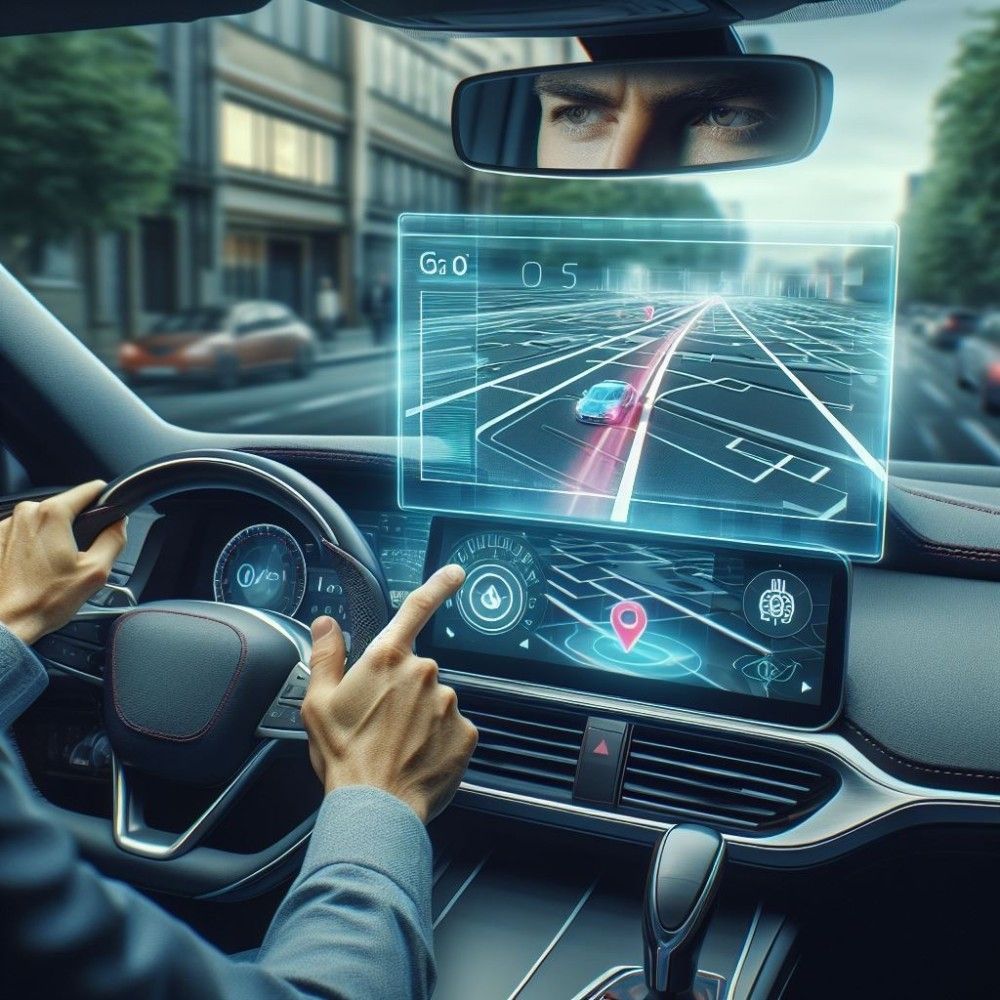
Leveraging Augmented Intelligence in our daily lives Using a Navigation device (Image created with DALL-E 3)
As we continue to push the boundaries of what's possible with technology, it's becoming increasingly clear that augmented intelligence, rather than pure artificial intelligence, may be the true superpower of the future. By combining the complementary strengths of humans and machines, we can tackle challenges that would be insurmountable for either alone, unlocking new levels of innovation, productivity, and understanding.
