
GenAI at Work: 5 Observations on Overcoming the Adoption Gap
BLUF | Organizations don’t fail at GenAI because of the technology—they fail because they skip the foundations of intelligent transformation.
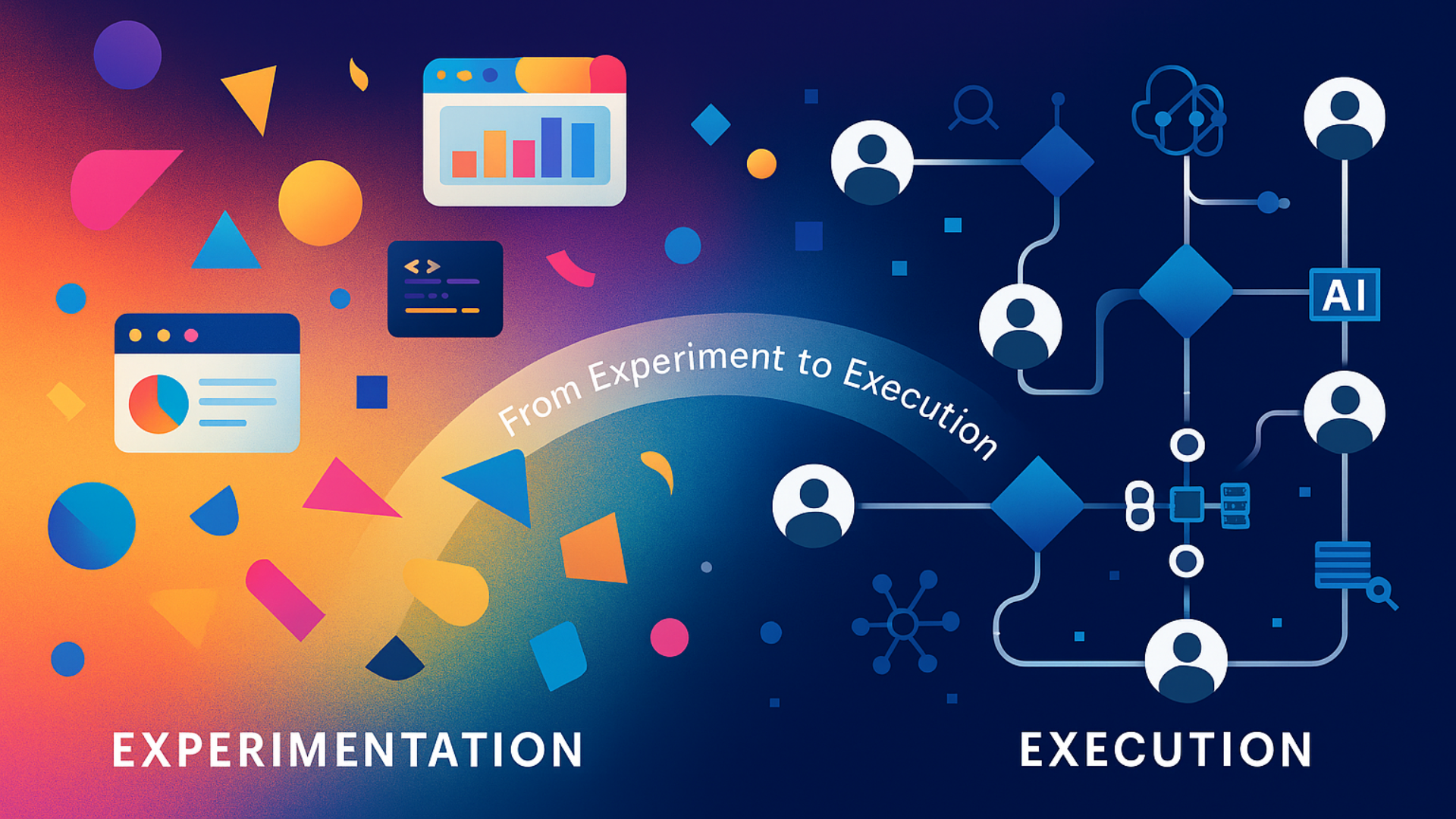
GenAI isn’t stuck in pilot mode because it lacks capability. It’s stuck because most organizations treat adoption as a sprint, not a system. They rush to deploy tools without first aligning people, process, and purpose. Across both public and private sectors, I’ve seen that closing the GenAI adoption gap requires more than enthusiasm. It takes structure, trust, and an understanding of how humans and machines truly work together.
These five observations distill what separates experimentation from execution and how leaders can turn GenAI from an experiment into an advantage.
Observation 1: Understanding the As-Is
Before introducing AI, every organization must understand its current state. Even with digital tools, many still rely on manual synthesis, fragmented documentation, and human memory.
Using the 5Ps (People, Policy, Process, Partners, & Platforms), I’ve helped teams map workflows, stakeholders, and systems, surfacing hidden redundancies and dependencies. This exercise often leads to the creation of a Business Body of Knowledge (BBoK), a structured repository that documents the who, what, and why behind critical activities.
The BBoK becomes the critical precursor to transformation:
- It codifies tribal knowledge and clarifies business logic.
- It provides context for generative AI, allowing it to understand relationships, terminology, and decisions.
- It aligns people and policy around a shared understanding of the business ecosystem.
Key insight: You can’t intelligently transform what you haven’t meaningfully mapped.
Observation 2: Bringing AI to the Table
Once the foundation is in place, generative AI can join as a new kind of teammate. The most successful transformations start small, piloting use cases where AI accelerates understanding, synthesizes insights, or generates first drafts.
AI tools are guided using the BBoK. Prompts, personas, and contextual cues are refined so outputs align with business standards and tone. Each iteration strengthens the repository, creating a feedback loop of learning.
Across clients, I’ve seen the human-AI relationship follow a familiar pattern: forming, storming, norming, performing. Early trials are clumsy. Mid-way, patterns emerge. Ultimately, AI becomes a trusted collaborator, augmenting human productivity rather than mimicking it.
This isn’t automation for efficiency’s sake. It’s augmentation for adaptability and intelligence.
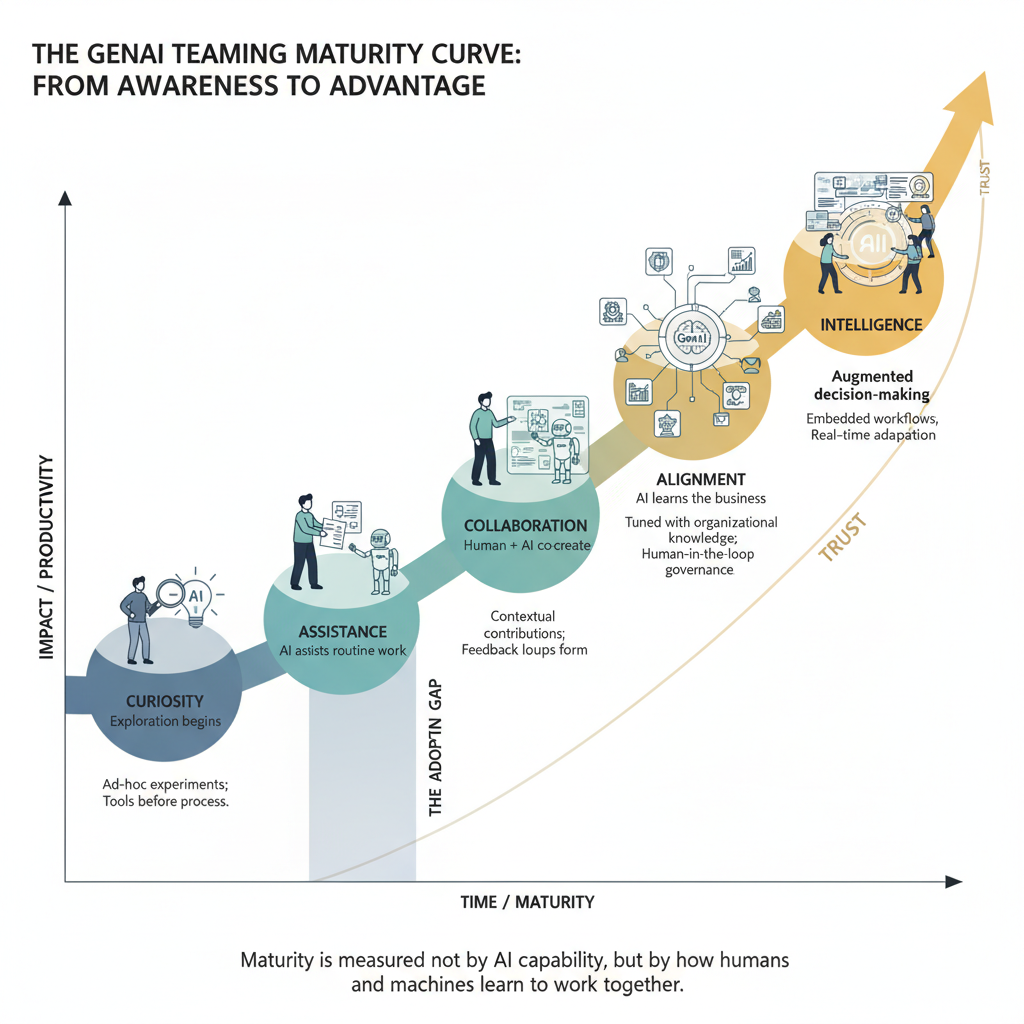
The GenAI Human Teaming Maturity Curve (Made with GenAI)
Observation 3: The Evolution of Team Mindset
Transformation is as much cultural as it is technical. Teams often begin by overestimating AI (“Let’s see what it can do”) or dismissing it outright. Real progress happens when they ask: “What can we do with it?”
The BBoK plays a quiet but powerful role here. By encoding business rules and relationships, it becomes a teacher to both humans and machines. Each AI-generated output is contextualized, traceable, and improvable.
Over time, skepticism gives way to exploration. I’ve witnessed light bulb moments when people see AI turn complexity into clarity or surface insights no one had noticed. The transformation becomes behavioral. Curiosity replaces caution.
Observation 4: Results and Impact
The impact across organizations is consistent and meaningful:
- Cycle times drop. Tasks that once took days now take hours.
- Quality improves. Consistency and accuracy rise as AI learns from human feedback.
- Confidence grows. Teams begin to trust both the data and their own decisions.
The Business Body of Knowledge evolves into a living decision backbone. It’s no longer static documentation but a continuously curated ecosystem, pruned, refined, and enriched by daily interaction. Generative AI becomes the bridge connecting data, knowledge, and productivity.
The care and feeding of the BBoK become a shared responsibility. It isn’t a deliverable. It’s a living system.
Observation 5: The Bigger Lesson
Intelligent transformation isn’t about deploying AI. It’s about designing for continuous learning.
The biggest lesson: Build your foundation before you automate. A well-structured body of knowledge gives AI context. Context gives decisions meaning.
This journey requires leadership, patience, and partnership. Machines may learn faster, but humans learn wiser. The organizations that master both will outthink, not just outwork, their competitors.
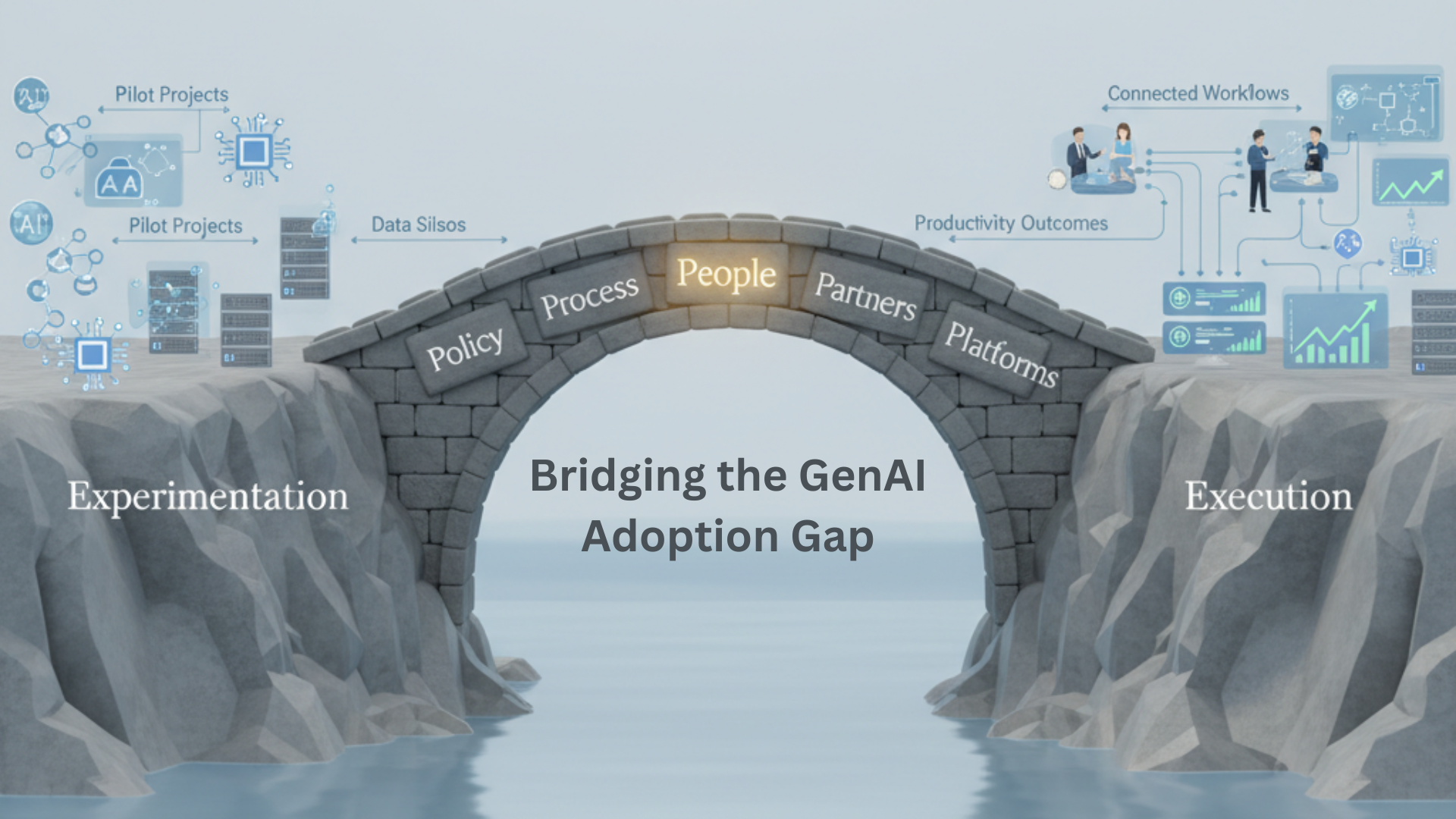
The People, Policy, Proces, Partners, & Platforms Bridge from Experimentation to Execution (Made with GenAI)
FInal Thoughts: From Awareness to Advantage
Across the organizations I’ve supported, intelligent transformation has redefined what progress looks like. By combining the 5Ps evaluation factors, a living BBoK, and generative AI, they’ve turned awareness into advantage.
The true outcome isn’t speed or savings. It’s shared understanding and decision confidence.
To begin your own intelligent transformation:
- Start small.
- Map what matters.
- Build your knowledge before your automation.
Intelligent transformation begins with curiosity and grows through care.
