
In the Speed of Now, Ready Beats Rushing
BLUF: Organizations fail at speed because they confuse urgency with readiness, the solution is clarifying ownership, embedding context, and practicing judgment before crisis forces action.
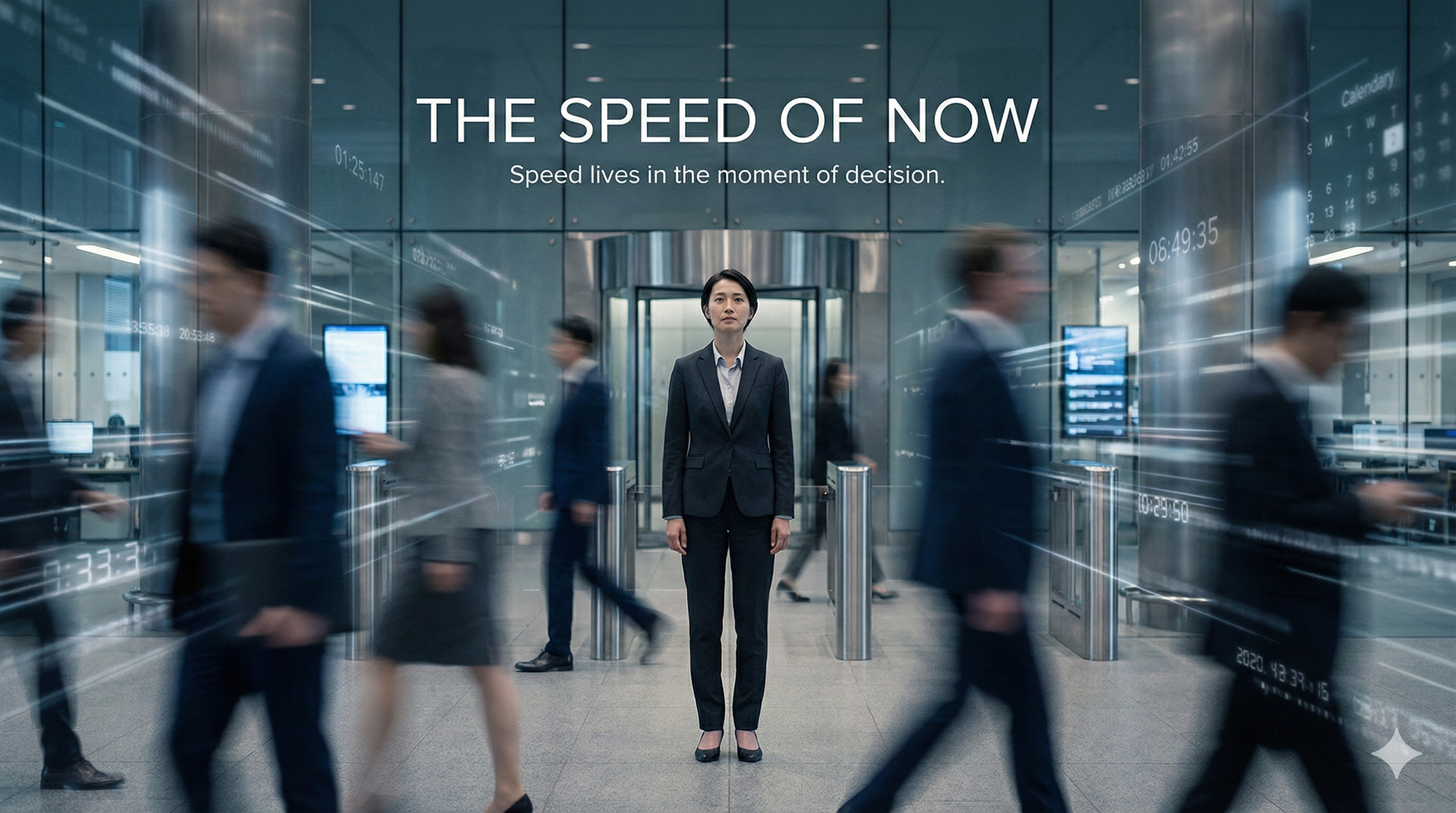
Most organizations think speed means moving faster. It doesn't.
Speed means being ready to decide before urgency forces the issue. Only 37% of organizations make decisions that are both high quality and fast. The gap isn't capability. It's readiness. Organizations confuse urgency with preparation. They demand speed without removing friction.
The cost shows up in the numbers. Lost productivity from context switching costs the global economy $450 billion annually. But the real expense isn't the switching itself. It's the momentum that never builds.
Decision readiness fixes this. Organizations that are 30% faster at addressing inefficiency always have access to the data they need. Not more data. The right data. At the right time. In the right hands.
What Decision Readiness Actually Means
Smooth is fast. Rushing is sloppy.
High-performing teams look fast because they did the work before urgency hit. They clarified roles. They built trust. They practiced deciding together. When urgency arrives, it doesn't break them. It activates them.
This happens through preparation, repetition, and trust. When these exist, speed becomes automatic. Teams don't waste time reorienting. They don't lose context. They don't wait for permission.
The difference matters. Rushing means cutting corners and skipping judgment. Speed means the work was already done. One creates chaos. The other creates momentum.
Why Most Organizations Fail
Organizations confuse speed with pressure. They demand faster decisions without removing the friction slowing everything down. The phrase "let me get back to you" becomes the default response. Not because people lack knowledge. Because systems aren't built for the way work actually flows.
I called a colleague once while deep in productive flow. I needed help solving something concrete. Their response was reasonable. "Let me get back to you." They did, eventually. But by the time they responded, the moment had passed. My momentum was gone.
Nothing malicious happened. Life intervened. Another call came in. Another meeting ran long. Context slipped away. That's how most delays happen. Not through neglect. Through cascading interruption.
Workers toggle roughly 1,200 times each day. Each toggle costs time. Each interruption breaks flow. Each delay compounds.
This pattern reveals the deeper problem. Leaders fear being wrong more than being slow. They build cultures where hesitation feels safer than action. Where political calculation trumps strategic logic.
That fear spreads. People stop experimenting. They stop learning. They stop deciding. Innovation doesn't die from bad ideas. It dies from delayed ones.
What Decision-Ready Systems Require
Decision readiness requires three things working together.
First, clear ownership before urgency arrives. When everyone knows who owns what, decisions happen at the point of knowledge. Companies with empowered teams report 25% faster time-to-market for new products. Empowerment isn't about authority. It's about accountability.
Second, embedded context that travels with the work. Organizations that move 30% faster always have access to the data they need. Not buried in systems. Not trapped in inboxes. Present, available, and clear.
Third, psychological safety around judgment. Not knowing is acceptable. Being unprepared is not. Admitting uncertainty builds trust. Deferring judgment indefinitely erodes it.
I worked for a leader once who always said no first. Not to be difficult. To force thinking. If someone came back a second time, prepared, they got help. Every time. The goal wasn't denial. It was decision ownership.
Where AI Fits
AI doesn't solve decision problems. It exposes them. It amplifies good systems and accelerates bad ones.
Used well, it sharpens thinking and surfaces gaps. Used poorly, it becomes the excuse. When decisions fail, tools get blamed first. Accountability disappears. Learning stops.
The real question isn't what AI can do. It's what we're prepared to decide. What stays human. What gets delegated. Who owns the outcome.
The System Design Problem
This isn't a technology problem. It's a system design problem.
Organizations still run on episodic work models. Ask. Analyze. Align. Respond later. But modern work is continuous. Momentum matters. Flow matters. Continuity matters.
The organizations that thrive now don't move faster. They remove friction earlier. They clarify decisions before urgency arrives. They practice judgment, not just analysis. They design for flow, not heroics.
They decide before the moment demands it.
Preparation is the only form of speed that scales.
References
- McKinsey & Company. "Effective decision making in the age of urgency." April 2019. https://www.mckinsey.com/capabilities/people-and-organizational-performance/our-insights/decision-making-in-the-age-of-urgency
- Spekit. "The Effects of Context Switching are Costing You Big Time." September 2024. https://www.spekit.com/blog/the-effects-of-context-switching-are-costing-you-big-time
- Orgvue. "New research finds link between faster decision-making and a greater share of profit." December 2020. https://www.orgvue.com/news/new-research-finds-link-between-faster-decision-making-and-a-greater-share-of-profit/
- Orbii. "The Impact of Slow Decision Processes on Organizational Success." September 2024. https://orbii.fr/en/posts/impact-of-slow-decisions-culture/
