
Sticker Shock is Costing You Billions
BLUF: The most expensive decision is not the one with the big price tag. It is the one that looked safe and cost you years.
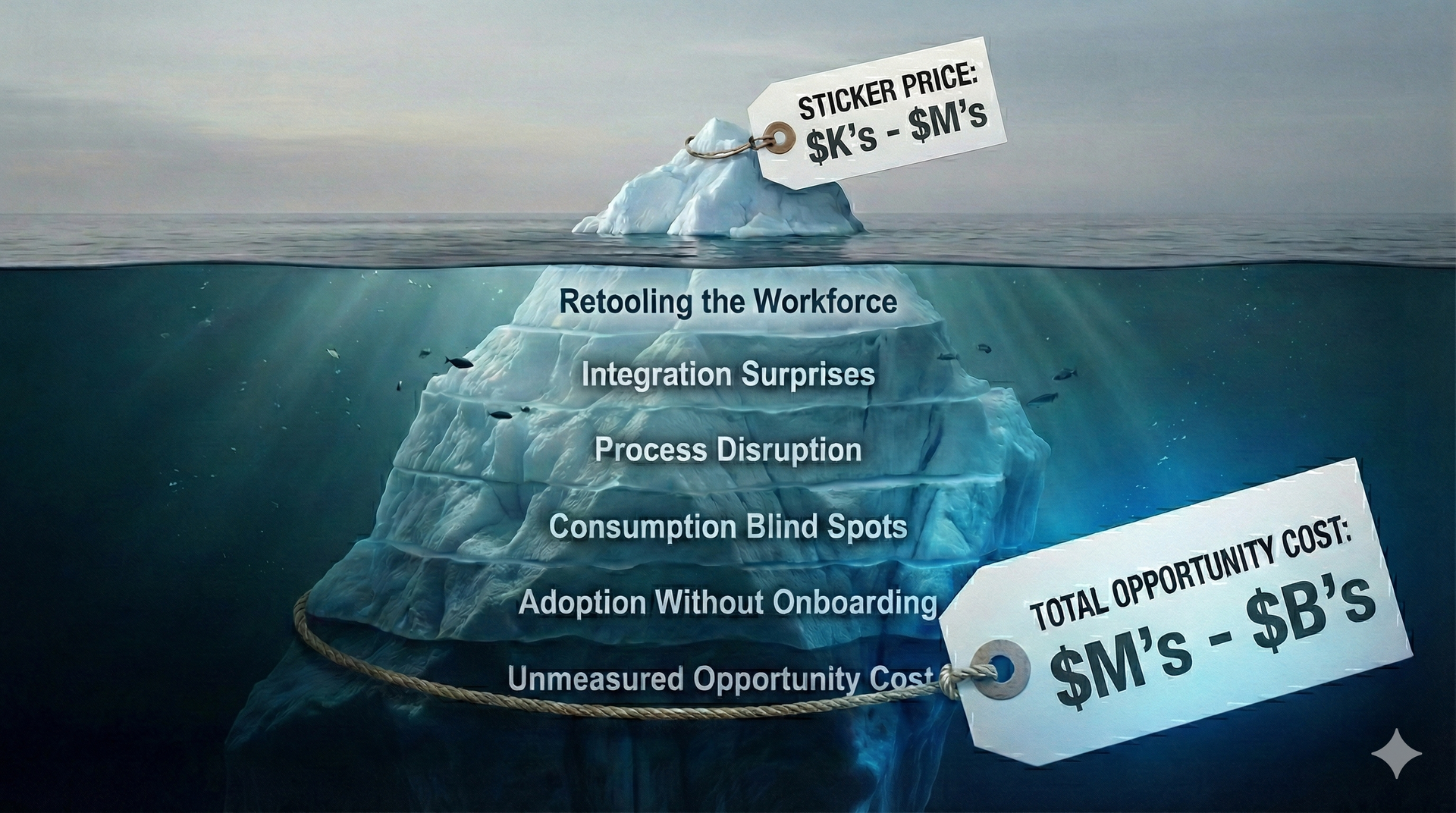
What's the real cost of deciding only by the price tag? (Image by J Eselgroth with Gen AI)
A few years ago, I published a series exploring the tension between cost and capability in organizational decision-making. The core question still holds. But the conversation has matured. So has the framework.
Here is what has not changed: leaders still flinch at the price tag.
The Flinch
Eight years ago, a leader rejected a $250 million upgrade across 50,000 assets. The number was too big. The organization chose a safer path instead. Today, they are no closer to solving the original problem. The opportunity cost is likely in the billions.
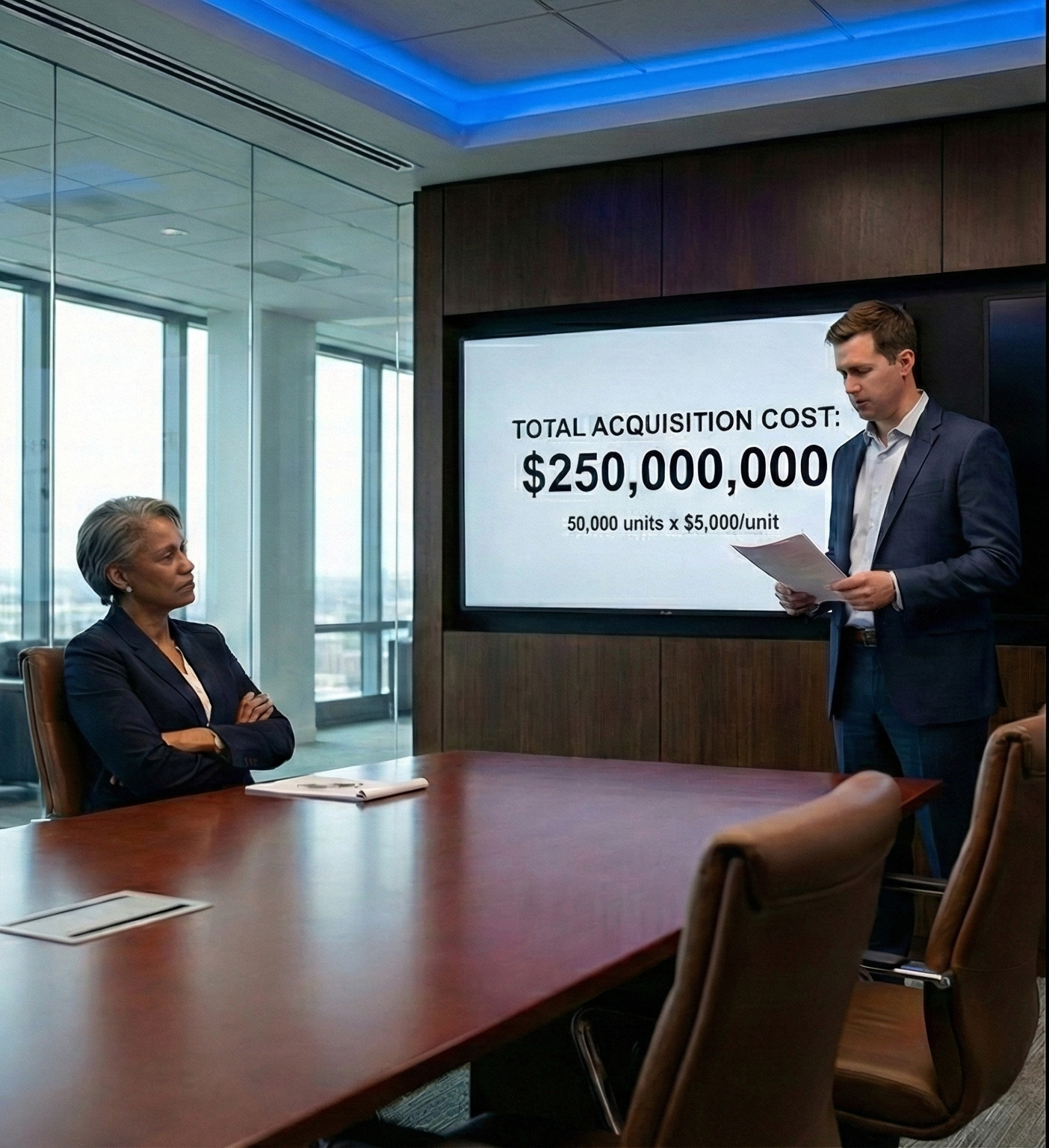
Inspired by True events, pitching an idea and being denied due to sticker shock (Image by J Eselgroth with Gen AI)
This pattern plays out everywhere. Public sector. Private sector. Every week.
In a similar, yet different scenario, a leader chose the “easy” option over a slightly more "expensive" one. The team then spent years burning hours and sinking costs trying to reach the same outcome. They never got there.
The problem is not budget discipline. Budget discipline is healthy. The problem is mistaking the sticker price for the total cost. And mistaking a narrow solution for a real capability.
Two Axes, One Diagnostic
Most cost conversations measure the wrong things. They focus on acquisition price and feature count. Neither tells you what the investment actually delivers over its lifecycle.
A better diagnostic uses two axes.
- The vertical axis measures Cost, Total Ownership Burden. Not just the purchase price. The full weight: retooling the workforce, integration surprises, process disruption, consumption blind spots, and the opportunity cost of delayed deployment. Every dollar you do not see on the invoice still shows up in the mission.
- The horizontal axis measures Capability, Force-Wide Utility. How many problems does this capability solve? How broadly can the organization adopt it? How fast does it reach value? A tool serving one team is a tool. A capability serving the enterprise is an investment.
Plot these two axes and you get four quadrants. Each one tells a different story.
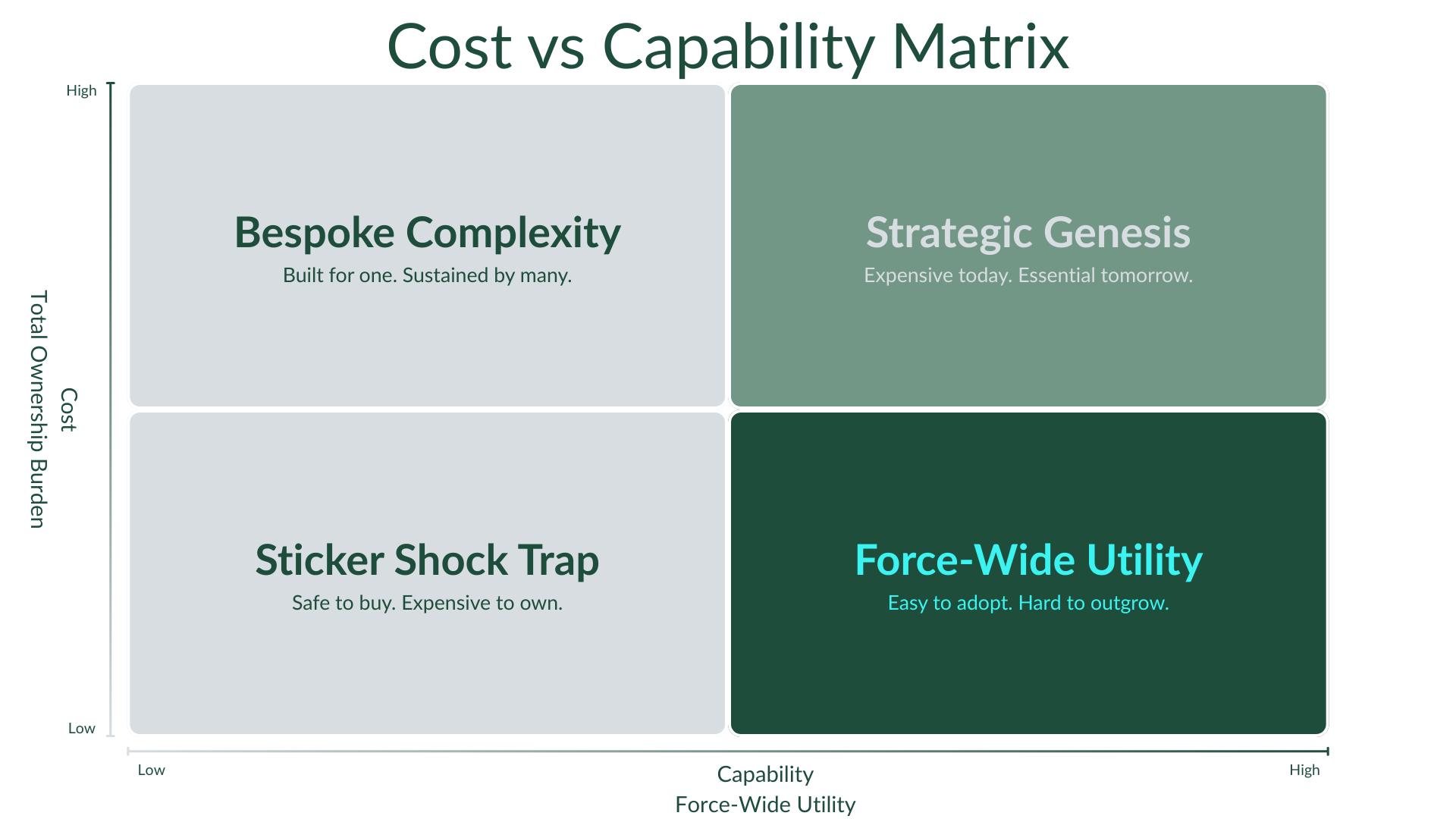
The new 2 by 2 Cost vs Capability Matrix (Image by J Eselgroth)
The Four Quadrants
The Sticker Shock Trap. Safe to buy. Expensive to own.
Low price. Narrow utility. The organization chose it because the number felt responsible. Training takes longer than expected. Adoption stalls. Integration requires workarounds nobody budgeted for. The hidden costs compound quietly. The safe choice becomes the most expensive one.
Bespoke Complexity. Built for one. Sustained by many.
High cost. Still narrow. These are the expensive one-offs built for a specific niche. They cannot scale. They require specialized training and constant maintenance. Shadow IT lives here. So do most legacy platforms no one can sunset.
Strategic Genesis. Expensive today. Essential tomorrow.
High cost. High potential. This is the R&D space. Experimental, multifaceted, and risky. Every organization needs some investment here. But the goal is never to stay. The goal is to mature these capabilities and push them toward broader adoption.
Force-Wide Utility. Easy to adopt. Hard to outgrow.
Lower total ownership burden. High versatility. This is the sweet spot. These capabilities are easy to adopt. Near zero-touch deployment. Fuel efficient. Data efficient. Energy efficient. They solve problems across the enterprise, not just for one team. Economies of scale live here. So does real return on investment.
Capabilities naturally evolve across these quadrants. Simon Wardley mapped this evolution from genesis to commodity. The same logic applies here. The leader’s job is not just to buy. It is to accelerate the migration path from experimental to essential.
The Conversation Worth Having
When a leader asks "why does this cost so much," they are asking a budget question. The answer must be a readiness statement. One that is outcome focsed.
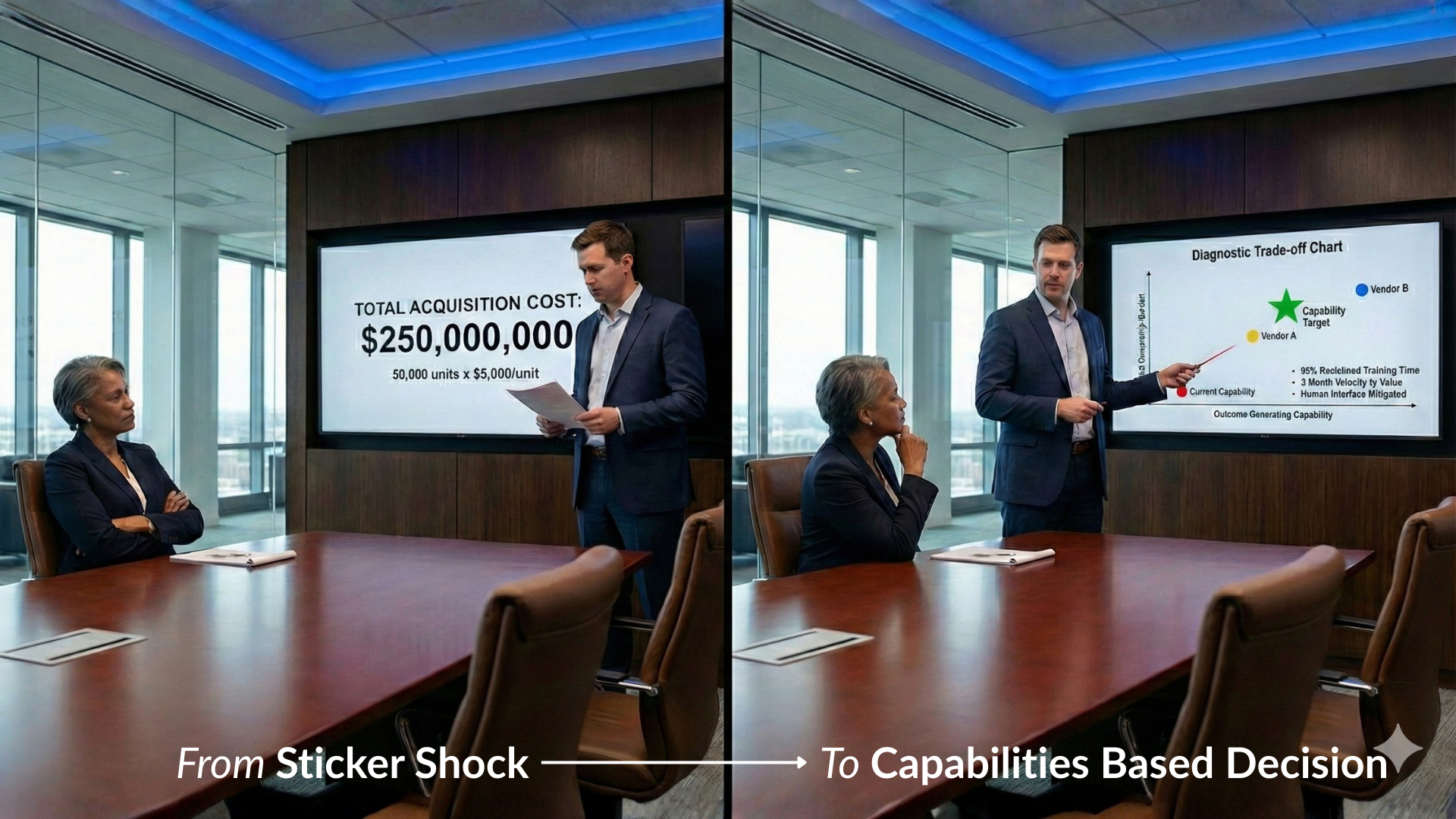
From Sticker Shock to a Capabilities Based Decision (Image by J Eselgroth with Gen AI)
Organizations have to stop buying artifacts and start investing in outcome-generating capacity. This requires radical transparency about the Total Ownership Burden. Look past the sticker price and see the invisible tail.
Does this require months of retraining, or is it near-zero-touch familiarization? What is the hidden cost in power, data, and sustainment nobody scoped in the original pitch? If the safer option takes three years to reach the force and the versatile one takes three months, the "savings" are a decision failure.
In a world accelerating every day, the real cost is measured in mission outcomes the organization failed to achieve while waiting for the "safe" system to orient.
Bring this framework to your next review. Plot the options. Compare Total Ownership Burden against Force-Wide Utility. Stop measuring technical milestones. Start mapping readiness timelines. Make the invisible costs visible.
This is where Decision Intelligence earns its weight. Plotting options on a 2x2 is a starting point. Understanding the second, third, and fourth-order effects of each option is where real clarity lives. A structured action-to-outcomes approach connects the sticker price to the total ownership burden, surfaces the hidden dependencies, and traces every investment decision to its downstream impact on people, process, and mission readiness. The framework exists. The question is whether your organization is willing to use it.
The goal is not to spend more. The goal is to invest with clarity.
